

Hormone Therapy in Perimenopause: What Are Your Options?
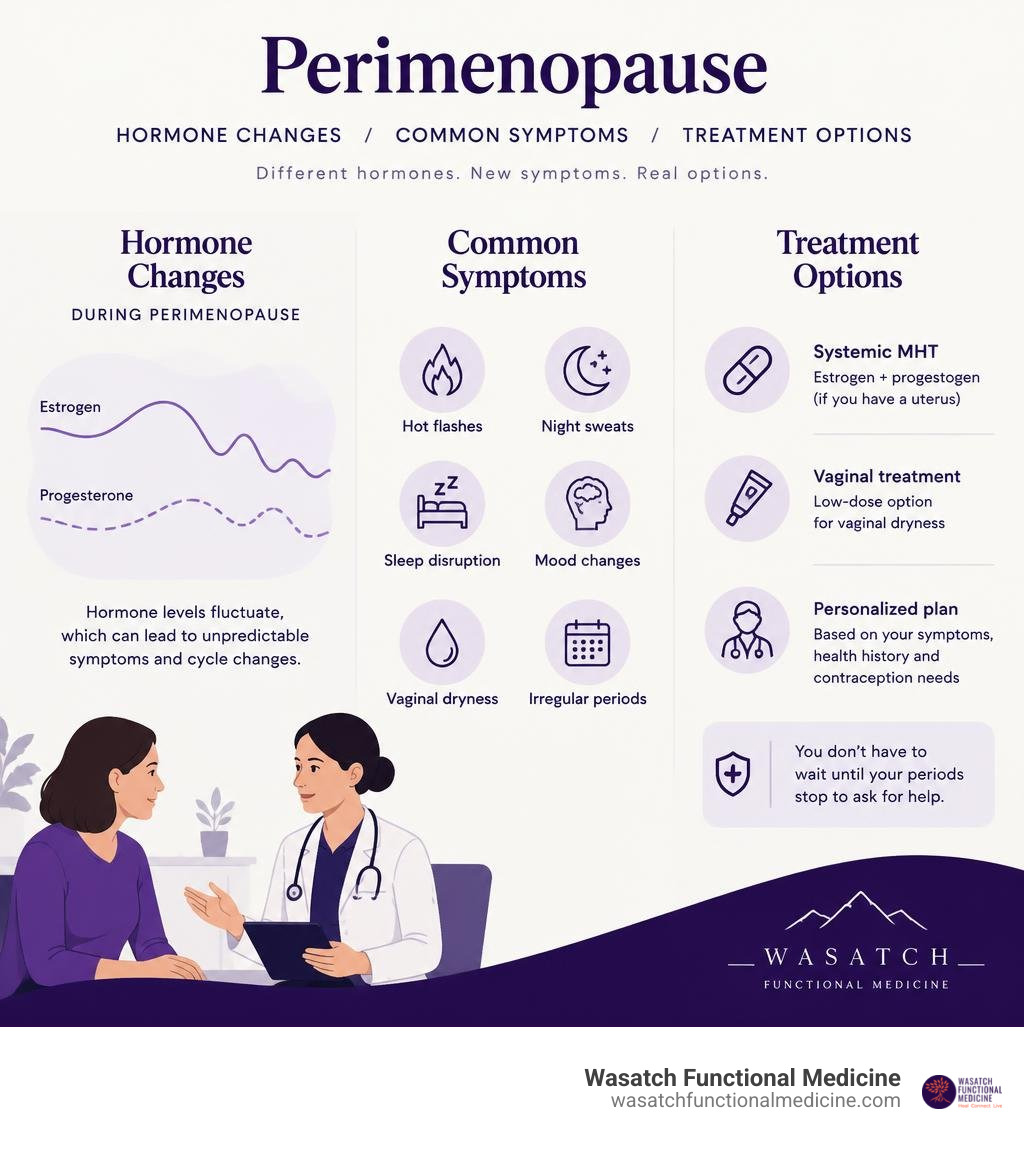
Hormone therapy can ease hot flashes, night sweats, and sleep disruption during perimenopause. If you have a uterus, systemic estrogen is usually paired with a progestogen to protect the uterine lining. If vaginal dryness is your main concern, a low-dose vaginal treatment may be enough. Your best option depends on your symptoms, health history, and whether you still need contraception.
Perimenopause can bring shifting hormone levels and unpredictable symptoms. You do not need to wait until your periods stop to ask for help. A clinician can review the benefits, risks, and non-hormonal options with you.
Understanding MHT vs. HRT and Hormone Therapy in Perimenopause
Navigating midlife hormonal changes can feel confusing when clinical terms seem to change every few years. Historically, clinicians used the term Hormone Replacement Therapy (HRT) to describe treatments that replenished ovarian hormones. Today, global guidelines—including the Asia-Pacific Menopause Federation Consensus Statement on the Management of Menopause 2024—prefer the term Menopausal Hormone Therapy (MHT).
MHT reflects a modern, nuanced understanding: we are not simply “replacing” youthful hormone levels in lockstep, but providing targeted endocrine support to relieve disruptive symptoms and protect long-term tissue health (Ang et al., 2025).
Navigating Terminology: MHT, HRT, and Perimenopausal Transition
Perimenopause is the biological transition leading up to menopause, often beginning in a woman’s early-to-mid 40s. While natural menopause is defined retrospectively as 12 consecutive months without a menstrual period (averaging age 51 in the United States), perimenopause is characterized by wild hormonal fluctuations.
During this window, ovarian reserve declines, ovulation becomes irregular, and progesterone levels drop. Simultaneously, estradiol levels swing unpredictably between sudden surges and deep troughs. This hormonal rollercoaster triggers a wide array of physical and emotional shifts. At Wasatch Functional Medicine, we look at these endocrine shifts through a comprehensive functional medicine approach that addresses the root drivers of hormonal dysfunction rather than simply masking symptoms.
Identifying Symptoms and Candidates for Early Intervention
About 25% of postmenopausal women experience debilitating symptoms, and these challenges frequently start years earlier during perimenopause. Vasomotor symptoms (hot flashes and night sweats) can persist for 7 years or more if left unaddressed.
Key candidates for intervention typically present with:
- Vasomotor instability: Disruptive hot flushes, sudden sweating, and night chills.
- Sleep architecture disruption: Insomnia, early morning waking, and non-restorative sleep.
- Mood changes: New-onset anxiety, irritability, brain fog, or low mood.
- Cycle irregularities: Shortened or lengthened cycle intervals with heavy, unpredictable bleeding.
- Genitourinary symptoms: Vaginal dryness, painful intercourse, and recurrent urinary urgency.
- Musculoskeletal discomfort: Joint stiffness and accelerated loss of bone mineral density.
For healthy women under 60 or within 10 years of their final period, the clinical benefits of starting treatment typically far outweigh the potential risks (Mehta et al., 2021).
Types of Hormone Therapy Formulations and Regimens
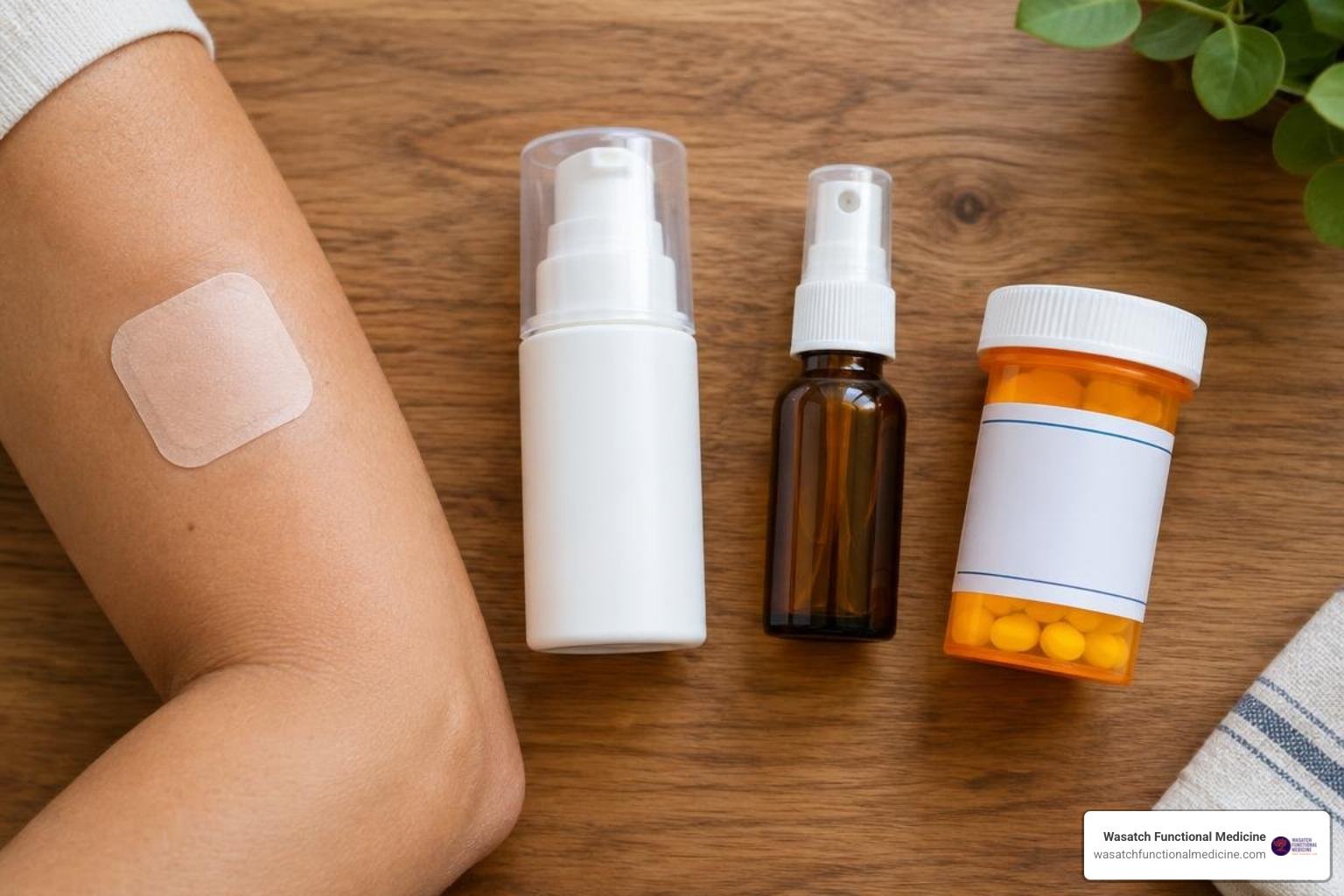
Hormone support is never one-size-fits-all. Formulations, delivery routes, and schedules must be matched to your unique anatomy, metabolic risk profile, and lifestyle preferences.
| Therapy Type | Common Formulations | Primary Indications | Endometrial Protection Needed? |
|---|---|---|---|
| Systemic Estrogen | Transdermal patch, gel, spray, oral tablet | Moderate-to-severe hot flashes, night sweats, bone loss prevention | Yes (if uterus is present) |
| Progestogens | Micronized oral progesterone, dydrogesterone, LNG-IUS | Prevents endometrial hyperplasia, aids sleep and anxiety | N/A (serves as the protective agent) |
| Local Vaginal Estrogen | Low-dose cream, pessary, vaginal ring | Vaginal dryness, burning, dyspareunia, recurrent UTIs | No (minimal systemic absorption) |
| Systemic Testosterone | Compounded cream, off-label titrated gel | Hypoactive Sexual Desire Disorder (HSDD), fatigue | No |
Choosing the Right Regimen: Estrogen and Progestogen Options in Hormone Therapy in Perimenopause
When starting hormone therapy in perimenopause, the presence of a uterus dictates your foundational regimen. Unopposed systemic estrogen stimulates the endometrium (the uterine lining), which significantly raises the risk of endometrial cancer (odds ratio 1.45–4.46 depending on duration). Adding an adequate progestogen completely neutralizes this risk, reducing endometrial cancer rates below baseline (hazard ratio 0.24–0.72).
Dosing schedules generally fall into two categories, as detailed in the AMS Guide to MHT/HRT Doses:
- Cyclic (Sequential) Regimens: Recommended for perimenopausal women who are still having periods. Systemic estrogen is taken daily, while a progestogen is added for 12 to 14 days per calendar month. This creates a predictable withdrawal bleed and prevents irregular spotting.
- Continuous Combined Regimens: Both estrogen and progestogen are taken every day without a break. This is preferred for women who have gone 12 months without a period or who have completed 12 months of cyclic therapy.
Systemic vs. Local Delivery Routes: Patches, Gels, and Vaginal Therapies
The route of delivery alters how hormones travel through your body:
- Transdermal Estrogen (Patches, Gels, Sprays): Absorbed directly through the skin into the bloodstream, bypassing first-pass liver metabolism. Transdermal estradiol does not stimulate hepatic clotting factor production, keeping venous thromboembolism (VTE) and stroke risks substantially lower than oral routes.
- Oral Estrogen (Tablets): Highly effective for symptom control and lipid modulation (raising HDL), but increases clotting factors during liver transit, carrying a slightly higher baseline clot risk.
- Local Vaginal Therapies: Delivered directly to localized vaginal and bladder tissues via low-dose creams, tablets, or silastic rings. These treat the Genitourinary Syndrome of Menopause (GSM) without systemic absorption and do not require oral progestogen protection.
The Role of Bioidentical Progesterone and Testosterone Support
Body-identical or bioidentical hormones have the exact molecular structure of human ovarian hormones. Oral micronized progesterone (derived from plant sterols) is structurally identical to endogenous progesterone. It offers mild calming properties via GABA-receptor pathways in the brain and carries a safer breast and cardiovascular profile than synthetic progestins. To help women choose the right path, we offer customized bioidentical hormone therapies designed around comprehensive testing.
While testosterone is often labeled a male hormone, women produce it in meaningful quantities prior to midlife. When systemic estrogen and progesterone are balanced yet low libido, chronic fatigue, and cognitive slowing persist, carefully monitored low-dose testosterone therapy can help restore vitality and improve Hypoactive Sexual Desire Disorder (HSDD).
Evidence-Based Benefits, Health Risks, and Special Considerations

Modern evidence shows that menopausal therapy provides far-reaching benefits beyond hot flash relief when initiated at the appropriate time.
- Skeletal Protection: In the landmark Women’s Health Initiative (WHI) trials, estrogen therapy reduced clinical fractures by 24% to 29% and hip fractures by 33% to 35% compared to placebo.
- Cardiovascular Health: The “Timing Hypothesis” demonstrates that starting therapy within 10 years of menopause (or before age 60) can reduce coronary heart disease risk by up to 32% and overall mortality.
- Metabolic Support: Estrogen helps maintain insulin sensitivity, potentially lowering the incidence of new-onset type 2 diabetes.
Safety, Risks, and Long-Term Considerations for Hormone Therapy in Perimenopause
A balanced medical assessment considers both absolute and relative risks:
- Breast Cancer: Combined estrogen-plus-progestin therapy is linked to a small potential increase in breast cancer risk (roughly 4 additional cases per 1,000 women after 5 years of use). In contrast, estrogen-alone therapy in women without a uterus showed a slight reduction in breast cancer incidence in WHI follow-ups.
- Blood Clots and Stroke: Oral estrogen carries a 2- to 4-fold relative increase in VTE risk, primarily in women with underlying risk factors like obesity or smoking. Using transdermal estradiol bypasses this mechanism, showing no significant increase in clot risk (Mehta et al., 2021).
- Endometrial Safety: Breakthrough spotting is reported by roughly 9.5% of women starting progestogen regimens. Any bleeding that persists past six months of continuous treatment requires clinical evaluation.
Regimens for Premature Ovarian Insufficiency (POI) and Specific Health Conditions
Premature Ovarian Insufficiency (POI)—defined as loss of ovarian function before age 40—and early menopause (ages 40–44) affect 1% to 3% and up to 3.7% of women, respectively. Evidence-based protocols, such as the NICE Guidelines on Menopause, strongly recommend continuing hormone therapy until at least the natural age of menopause (age 51). This replaces missing endocrine support to protect against early cardiovascular disease, dementia, and osteoporosis (Ang et al., 2025).
For women with specific co-occurring conditions:
- Cardiovascular Risk & Hypertension: Transdermal estradiol combined with oral micronized progesterone avoids hepatic stimulation and blood pressure spikes.
- Diabetes & Metabolic Syndrome: Low-to-moderate transdermal doses improve glucose utilization and minimize lipid disturbances.
- Migraine with Aura: Stable transdermal delivery avoids the estrogen dips that trigger debilitating migraines.
- Prior Hormone-Sensitive Cancers: Non-hormonal medications (such as SSRIs/SNRIs, gabapentin, or NK3 receptor antagonists like fezolinetant) provide alternative vasomotor relief.
Integrative Lifestyle Approaches
Hormone therapies work best alongside targeted lifestyle habits. We encourage an integrative foundation that addresses all pillars of midlife vitality:
- Targeted Nutrition: A nutrient-dense, anti-inflammatory whole-foods diet rich in phytoestrogens, healthy fats, and adequate protein balances insulin and curbs systemic inflammation.
- Strength and Resistance Training: Lifting weights stimulates bone remodeling, preserves metabolic muscle mass, and offsets age-related sarcopenia.
- Restorative Sleep and Stress Reduction: Clinical hypnosis and cognitive behavioral therapy (CBT) help downregulate an overactive sympathetic nervous system, reducing hot flash severity.
- Smoking Cessation: Smoking accelerates hepatic estrogen clearance and spikes cardiovascular risks; quitting directly improves treatment safety and efficacy.
For more details on how these lifestyle therapies fit into our clinical process, explore our answers to frequently asked questions.
Frequently Asked Questions About Perimenopause Hormone Support
How long can you safely stay on hormone therapy?
There is no arbitrary time limit or mandatory cutoff age for hormone therapy. Clinical decisions should be guided by your symptom burden, personal health history, and ongoing annual risk-benefit evaluations with your provider. Many women safely use low-dose transdermal regimens for several years to maintain their quality of life.
Do you need progesterone if you have had a hysterectomy?
If you have had a complete surgical hysterectomy, you generally do not need a progestogen because there is no uterine lining to protect. You can take estrogen-only therapy. A notable exception is a history of severe endometriosis, where low-dose progestogen is sometimes continued to prevent stimulation of residual endometrial implants.
What are the earliest signs that hormone therapy is working?
Vasomotor relief is often the first benefit, with night sweats and hot flashes improving within two to four weeks. Sleep quality, daytime energy, and mood stability typically rebound over the first one to two months, while vaginal tissue regeneration and bone density preservation build gradually over three to six months.
Conclusion
Perimenopause is a natural biological shift, but severe, disruptive symptoms do not have to be your baseline. By combining individualized hormone therapies with root-cause functional medicine and lifestyle changes, you can protect your bone, cardiovascular, and metabolic health for decades to come.
If you are ready for a thorough, root-cause health assessment, our clinical team at Wasatch Functional Medicine in South Ogden, Utah, is here to help you regain your vitality with personalized women’s wellness care.
References
Mehta J, Kling JM, Manson JE. “Risks, Benefits, and Treatment Modalities of Menopausal Hormone Therapy: Current Concepts..” Frontiers in endocrinology, 2021. PMCID PMC8034540. Ang SB, Sugianto SRS, Tan FCJH, Davison S, Yu Q, Terauchi M, Kim MR, Shah J, Nasreen SZA, Ho CM, Sodnomdorj E, Siregar MFG, Hussain R, Noblejas-Gamilla MCZ, Chua Y, Tsai YC, Jaisamrarn U. “Asia-Pacific Menopause Federation Consensus Statement on the Management of Menopause 2024..” Journal of menopausal medicine, 2025. PMID 40347161.