

How to Find a Qualified Functional Medicine Doctor
A functional medicine doctor is a licensed physician who looks at your health history, daily habits, and other factors that may contribute to your symptoms. To find a qualified one, verify their medical license, check their functional medicine training, and ask about their experience with your health concern. Before booking, ask what visits, tests, and follow-up care may cost.
If you have ongoing gut, hormone, or autoimmune concerns, this approach may give you more time to discuss the full picture. It should also work alongside, not replace, the care you need from your primary doctor or specialists. This guide will help you compare credentials, prepare for a first visit, and choose care that fits your needs.
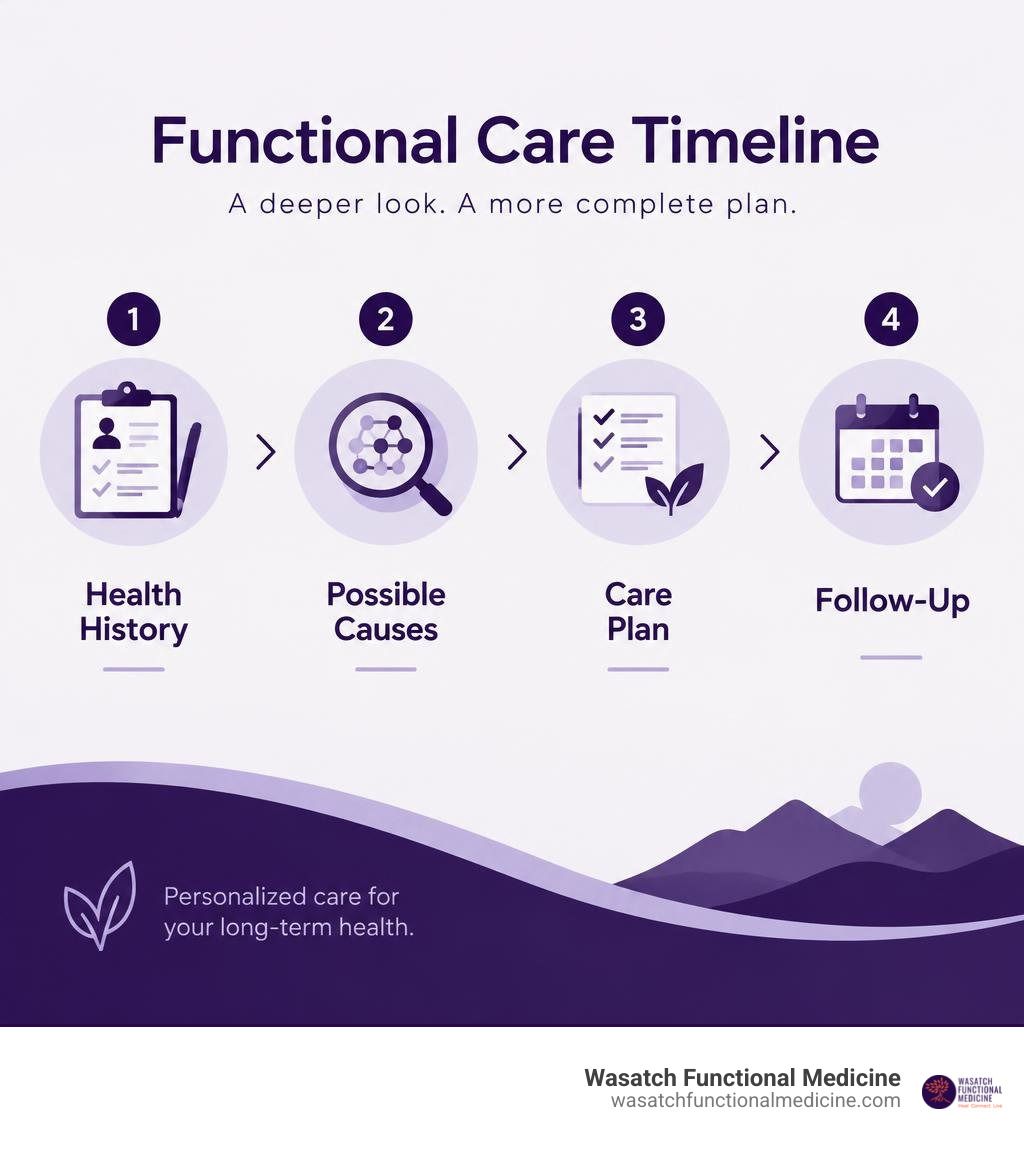
What Is a Functional Medicine Doctor and How Do They Differ from Conventional Physicians?
When you visit a conventional medical clinic, the standard appointment often lasts ten to fifteen minutes. The focus is usually on identifying an acute issue, matching your symptoms to an established diagnosis, and providing a rapid solution—often via prescription medication or surgery. Conventional medicine excels at acute crises: broken bones, trauma care, infections, and emergency interventions.
However, when managing complex chronic illnesses—such as stubborn digestive issues, unexplained fatigue, or systemic inflammation—conventional methods sometimes fall short. That is where discovering why functional medicine is right for you becomes essential.
Functional medicine treats the patient who has the disease rather than merely treating the disease the patient has. Instead of asking, “What pill matches this symptom?”, functional clinicians ask, “Why did this symptom develop in the first place?”
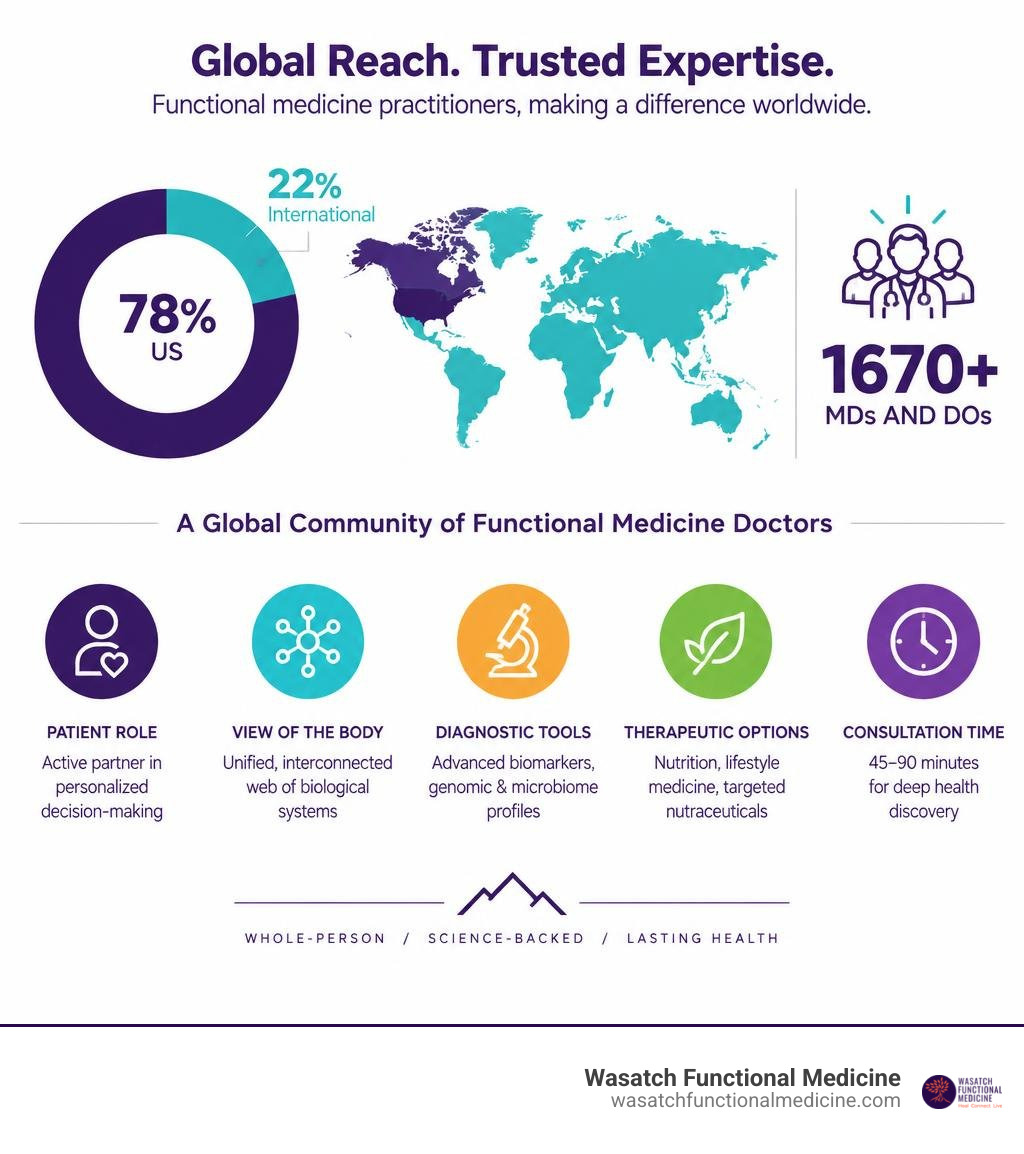
| Approach Dimension | Conventional Medicine | Functional Medicine |
|---|---|---|
| Primary Focus | Acute care, symptom suppression, disease management | Root-cause identification, chronic disease reversal, optimal wellness |
| Patient Role | Passive recipient of standardized protocols | Active partner in personalized decision-making |
| View of the Body | Individual organs managed by separate specialties | Unified, interconnected web of biological systems |
| Diagnostic Tools | Standard pathology ranges, acute imaging | Functional lab ranges, advanced biomarkers, genomic & microbiome profiles |
| Therapeutic Options | Pharmaceuticals, surgery, acute therapies | Nutrition, lifestyle medicine, targeted nutraceuticals, stress modulation |
| Consultation Time | 10–15 minutes on average | 45–90 minutes for deep health discovery |
The Whole-Body Systems Biology Approach
In functional medicine, we look at the body through the lens of systems biology. Your body is not a collection of isolated compartments. Your gut, endocrine system, nervous system, and immune defenses are constantly communicating.
Consider an issue like chronic joint pain or joint instability. While an orthopedic specialist looks directly at the structural ligaments or cartilage, a functional clinician explores the entire biological terrain. If chronic ligament laxity causes a joint to give way, or if systemic inflammation slows tissue repair, we investigate underlying nutritional deficiencies, hormone imbalances, or gut dysbiosis that impair collagen synthesis.
By identifying and addressing upstream triggers—such as hidden food sensitivities, toxic exposures, or chronic micro-stress—we help create the internal environment necessary for real, sustained healing.
Core Credentials and Finding Qualified Care
Navigating holistic medicine requires discernment. Today, the global functional healthcare community is expanding rapidly. The Institute for Functional Medicine (IFM) referral network features more than 3,690 active practitioner listings across 77 countries. While 78% of these professionals are based in the United States, global adoption continues to rise.
Crucially, over 1,670 of these active listings represent conventional medical doctors (MD) and doctors of osteopathic medicine (DO). This demonstrates a growing convergence between scientific rigor and holistic methodologies. According to the Cleveland Clinic, functional medicine providers use a systems-oriented approach to engage patients as active partners in their own care.
Key Credentials and Certifications of a Qualified Functional Medicine Doctor
Anyone can claim to practice “integrative wellness,” which makes verifying credentials essential. When researching practitioners, look for:
- Foundational Medical Licensure: Ensure your provider holds an active, unrestricted medical license (such as MD, DO, NP, or PA) in good standing with their state licensing board.
- IFM Certification (IFMCP): The Institute for Functional Medicine Certified Practitioner credential represents rigorous, post-graduate education. Candidates complete foundational coursework, six advanced practice modules, and pass a comprehensive certification exam.
- Continuing Medical Education: Medicine evolves quickly. Qualified practitioners regularly complete advanced training in clinical nutrition, endocrinology, gastroenterology, and functional immunology.
In-Person Care vs. Telehealth Consultations

Advances in digital healthcare mean you are no longer limited by your immediate zip code. Telehealth has made working with top-tier practitioners straightforward and accessible.
- In-Person Visits: Best for physical exams, specialized diagnostic procedures, and hands-on therapies. Local clinics provide direct personal connection and immediate physical assessment.
- Telehealth Consultations: Ideal for in-depth health reviews, discussing advanced lab results, tracking progress, and receiving nutrition coaching from home. Specialized test kits (such as stool, saliva, or urine collections) can be delivered straight to your door.
Many patients use a hybrid approach: they visit a regional clinic for baseline physical evaluations and manage their ongoing treatment plans through secure virtual sessions.
Practical Steps to Evaluate Practitioners and Prepare for Your Care
Choosing the right clinician is a collaborative investment in your future. You deserve a healthcare provider who listens closely and works with you as a dedicated partner.
Essential Questions to Ask a Functional Medicine Doctor Before Scheduling
Before booking your first appointment, ask these practical questions:
- What is your clinical background and primary training? Confirm their foundational licenses and functional medicine credentials.
- How much experience do you have with my specific condition? Whether you are managing Hashimoto’s thyroiditis, SIBO, or chronic joint instability, find out if they regularly treat similar cases.
- What is your communication philosophy? How does the clinic handle direct questions between visits? Is there a secure messaging portal?
- How do you approach diagnostic testing? Do they use targeted testing to answer specific clinical questions, or do they rely on one-size-fits-all testing packages?
- How do you collaborate with conventional doctors? Ensure they respect and coordinate with your existing primary care team and specialists.
What to Expect During Your Initial Comprehensive Visit
Your initial consultation is entirely different from a standard, rushed doctor’s appointment. You can expect:
- An Extensive Health Intake: You will walk through your complete health timeline from birth to the present day, covering childhood illnesses, antibiotic use, major life stressors, and environmental exposures.
- A Deep Lifestyle Assessment: We review your sleep hygiene, daily movement, dietary habits, workplace environment, and emotional health.
- Targeted Diagnostic Planning: Rather than guessing, your doctor will outline specific lab tests—such as comprehensive digestive stool analysis, organic acid testing, or hormone panels—to pinpoint functional imbalances.
To learn more about how initial appointments work and how to prepare, review our answers to frequently asked questions.
Understanding Pricing, Insurance, and Value in Root-Cause Care
One of the most common questions patients ask is why many functional medicine practices operate outside traditional insurance networks.
Insurance models are built around high-volume, brief visits focused on acute symptom codes. Spending 60 to 90 minutes exploring nutrition, lifestyle factors, and complex biochemistry does not fit standard reimbursement schedules.
While initial out-of-pocket costs for consultations and specialized testing may be higher, functional medicine is a long-term investment in your health. Resolving root causes helps prevent decades of costly prescription refills, repeated specialty visits, and avoidable surgeries.
Most clinics allow you to use Health Savings Accounts (HSA) or Flexible Spending Accounts (FSA) for consultations and diagnostics. You can also explore our educational blog for practical, science-backed lifestyle strategies you can start using right away at no cost.
Frequently Asked Questions About Functional Healthcare
Can functional medicine practitioners order standard lab tests and imaging?
Yes. Fully licensed medical practitioners (MDs, DOs, NPs, and PAs) can order standard diagnostic tests, including routine blood counts, lipid panels, metabolic profiles, and advanced imaging such as MRIs, CT scans, and ultrasound evaluations. They often evaluate standard lab markers using narrower, optimal ranges to catch emerging functional imbalances before they progress into disease.
How long does it typically take to see results from functional treatments?
Because functional medicine addresses root causes rather than simply masking symptoms, healing requires time. Most patients notice meaningful improvements in their energy, digestion, and pain levels within 4 to 12 weeks of starting their nutrition and lifestyle plan. Resolving long-standing autoimmune conditions, deep-seated gut dysbiosis, or chronic tissue healing often takes 6 to 18 months of consistent care.
Do I need to stop seeing my primary care doctor when starting functional care?
No. Functional medicine works best alongside your conventional medical care. Your primary care physician and specialists remain essential for routine preventative screenings, urgent interventions, and acute disease management. A collaborative care model ensures you receive safe, thorough, and well-rounded medical support.
Conclusion

Chronic health concerns rarely appear overnight, and resolving them requires an approach that looks at your whole health history. By working with a qualified clinician who investigates the root causes of disease, you can take control of your long-term wellness.
At Wasatch Functional Medicine in South Ogden, Utah, we create personalized care plans focused on gut health, autoimmune support, hormone balance, and chronic disease recovery. When you are ready to move past temporary fixes, begin your journey with personalized functional medicine care. Please contact us or complete your booking to schedule your comprehensive evaluation today.