

How Stress Management Health Coaching Helps You Prevent Burnout
Start by noticing when stress shows up, then make one small change you can repeat. A health coach can help you track stress triggers and body cues, practice a calming skill such as slow breathing, and build steadier sleep, meal, and work-break routines. Regular check-ins help you adjust the plan when life gets busy.
Chronic stress can affect energy, sleep, mood, and digestion. If you are already managing gut, hormone, or autoimmune symptoms, those changes may feel especially hard to sort out. Coaching offers practical support, but it does not diagnose a condition or replace medical or mental health care. And while people often say adrenal burnout, it is not a medical diagnosis.
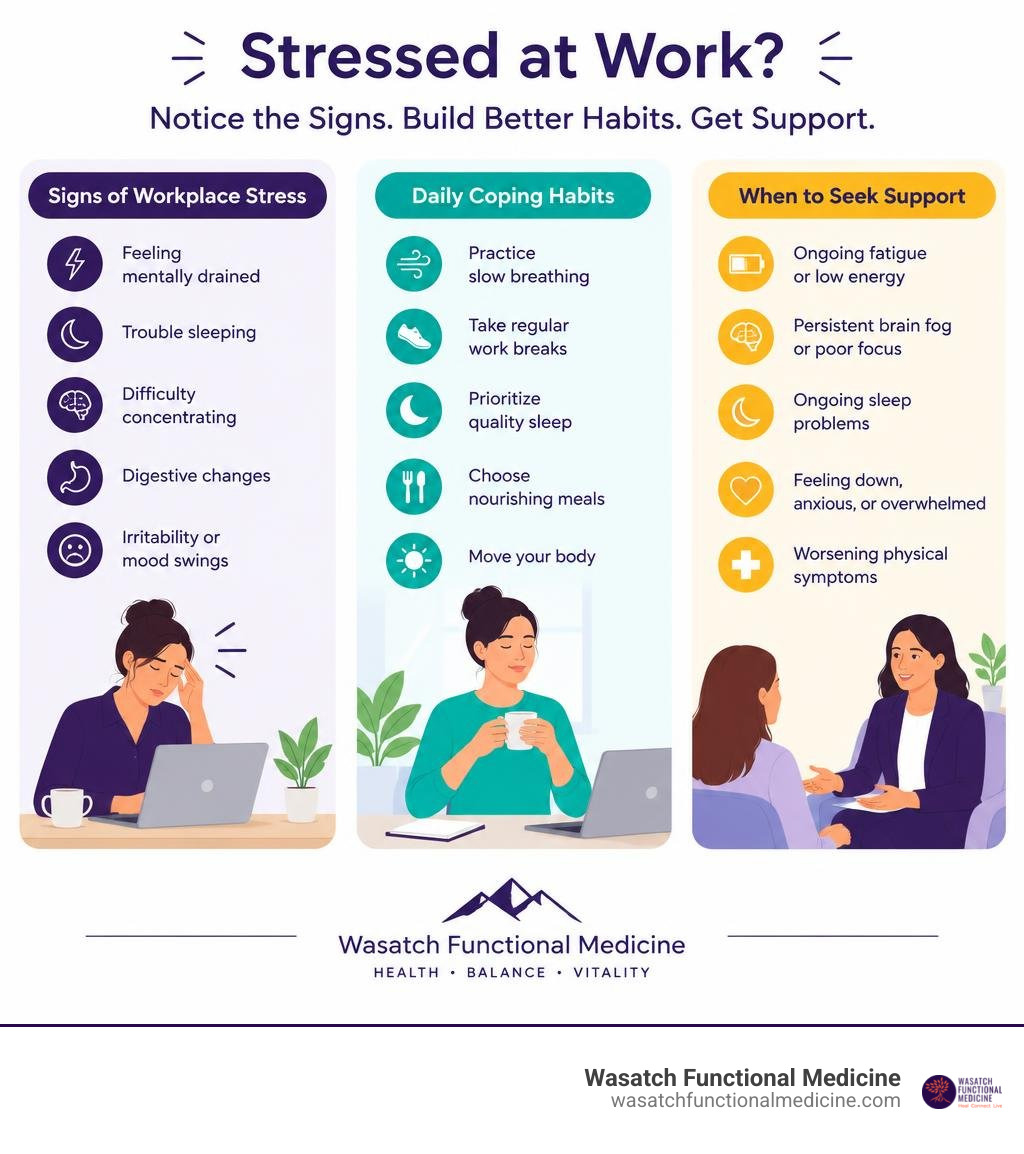
When day-to-day pressure remains unchecked, allostatic load—the cumulative wear and tear on your physiological systems—begins to climb. In our functional medicine clinic in South Ogden, Utah, we frequently see how chronic cognitive or physical strain alters the hypothalamic-pituitary-adrenal (HPA) axis. Over time, an inverted cortisol curve leaves individuals feeling “tired and wired,” struggling with brain fog, and disconnected from their natural somatic awareness. Partnering with a dedicated professional through stress management health coaching bridges the critical gap between understanding what harms your vitality and implementing daily habits that protect it. The American Psychological Association offers a useful overview of how chronic stress affects the body.
What Is Stress Management Health Coaching and How Does It Work?
Stress management health coaching is a collaborative, client-centered process designed to help you identify personal stress triggers, decode somatic signals, and build sustainable behavioral patterns. Unlike passive advice-giving, coaching focuses on empowering you to navigate autonomic nervous system arousal, moving you out of chronic fight-or-flight and into restorative parasympathetic states.
In our holistic practice, we pair coaching with comprehensive functional medicine protocols to address root causes such as gut dysbiosis, systemic inflammation, and micronutrient depletions that amplify biological stress.
| Feature | Stress Management Health Coaching | Self-Guided Stress Management |
|---|---|---|
| Personalization | Tailored to individual physiology, triggers, and values | Generic advice found in apps or self-help books |
| Accountability | Weekly structured check-ins and objective tracking | Dependent purely on willpower during high-stress periods |
| Skill Mastery | Real-time biofeedback, breathwork, and cognitive reframing | Trial-and-error implementation of complex techniques |
| Holistic Integration | Connects nutrition, circadian rhythms, and mental resilience | Often isolates mental stress from physiological health |
| Sustainability | Iterative goal setting based on behavioral science | High dropout rate when acute motivation wanes |
How Stress Management Health Coaching Supports Mental Resilience
Coaching differs fundamentally from psychotherapy. While therapy often examines past trauma and treats diagnosable mental health conditions, coaching maintains a present-to-future focus. It operates on principles of positive psychology, behavioral skill-building, and self-efficacy.
By defining clear diagnostic boundaries, coaches work with functional individuals who are ready to build active coping mechanisms. This approach teaches you how to reframe setbacks into learning opportunities, maintain personal boundaries against overcommitment, and cultivate durable mental resilience without pathology (Ziaka et al., 2025).
The Mind-Body Connection and HPA Axis Regulation
Your autonomic nervous system is in constant dialogue with your neuroendocrine pathways. Prolonged mental strain creates sympathetic dominance, which signals the adrenal glands to continually secrete cortisol, epinephrine, and norepinephrine.
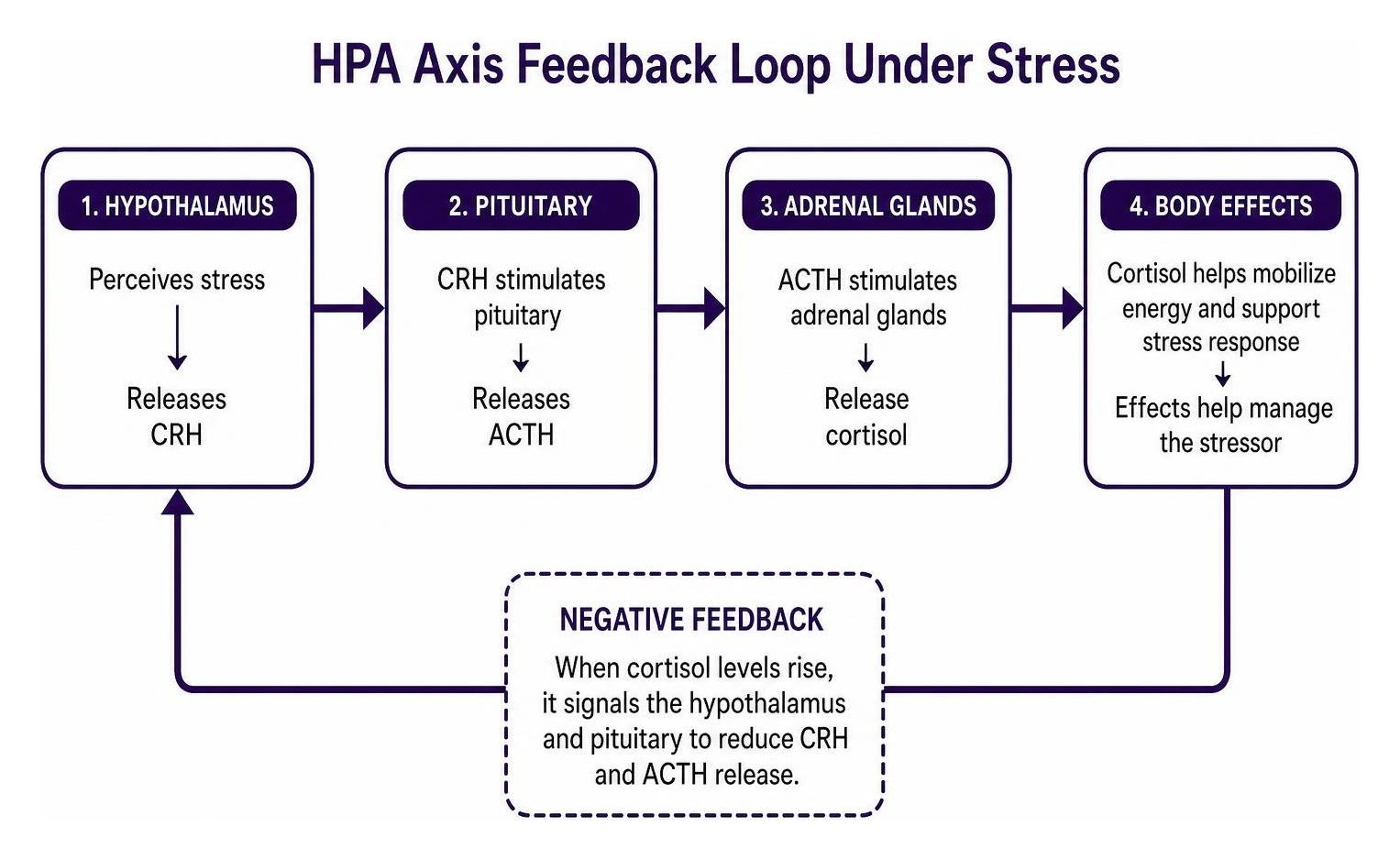
Health coaches utilize targeted mind-body practices to stimulate vagus nerve activation. By activating the parasympathetic “rest and digest” branch of the nervous system, you re-establish neuroendocrine balance, normalize your natural cortisol rhythm, and develop somatic grounding techniques that quiet physical tension before it escalates into systemic fatigue.
Core Evidence-Based Strategies Used in Stress Coaching

Effective stress coaching relies on validated frameworks, including the Perceived Stress Scale (PSS-14) and established habit formation science. Rather than overhauling your life overnight, coaches introduce micro-habits that rewire neural pathways and lower overall reactivity.
Proven Techniques in Stress Management Health Coaching
During coaching sessions, clients master an individualized toolkit of self-regulation techniques:
- Box Breathing & Diaphragmatic Work: Inhaling, holding, exhaling, and pausing for equal counts of four activates the baroreflex and decreases acute heart rate reactivity.
- Progressive Muscle Relaxation (PMR): Systematically tensing and releasing muscle groups restores somatic awareness and releases stored muscular tension.
- Cognitive Restructuring: Identifying cognitive distortions (such as catastrophizing or all-or-nothing thinking) and reframing them into objective, actionable perspectives.
- Circadian Rhythm Resets: Strategic morning sunlight exposure, blue-light mitigation in the evening, and strict sleep hygiene protocols help synchronize melatonin and cortisol patterns.
- Daily Routine Control: Structuring consistent timing for meals, work blocks, and restorative rest creates baseline stability for neuroendocrine recovery (Ziaka et al., 2025).
Nutrition, Movement, and Restorative Rest Protocols
Physical habits form the foundation of emotional resilience. A dysregulated nervous system frequently triggers reactive hypoglycemia, which spikes cortisol further. Coaches guide you through adrenal nourishment strategies, such as pairing complex carbohydrates with clean proteins and healthy fats to stabilize blood sugar.
We also examine movement intensity. High-intensity interval training (HIIT) can exacerbate HPA axis strain in an already depleted individual. Coaches transition clients toward restorative movement—such as zone-2 walking, gentle yoga, and mobility work—while scheduling daytime micro-breaks to preserve sleep architecture. Exploring why functional medicine is right for you reveals how combining lifestyle coaching with advanced biomarker testing creates a clear roadmap for lasting energy restoration.
Clinical and Organizational Benefits of Stress Management Coaching

The impact of systematic stress reduction is substantial. Chronic workplace strain and burnout represent significant challenges for modern professionals. Incorporating structured stress management practices helps reduce daily fatigue, elevate mental clarity, and support sustainable personal and professional performance.
Individual Health Outcomes and Perceived Stress Reduction
Clinical research demonstrates the power of structured health coaching. In an 8-week stress management and health coaching randomized controlled trial, participants in the intervention group experienced a statistically significant decrease in perceived stress (PSS-14 score, p = 0.043) (Ziaka et al., 2025).
Furthermore, participants achieved significant improvements on the Healthy Lifestyle and Personal Control Questionnaire (HLPCQ, p = 0.048), particularly in ‘Daily Routine’ control (p = 0.001) and ‘Social and Mental Balance’ (p = 0.003) (Ziaka et al., 2025). By systematically improving these baseline metrics, individuals experience measurable gains in subjective happiness, self-efficacy, and immune resilience.
Applying Stress-Management Skills at Work
Translating resilience skills to the professional environment requires practical strategies:
- Time-Blocking and Boundary Enforcement: Creating firm work-life boundaries and declining low-priority obligations that lead to overcommitment.
- Desk-Side Grounding: Utilizing the 5-4-3-2-1 sensory technique during high-stakes meetings or demanding project deadlines.
- Structured Recovery Transitions: Establishing a clear evening wind-down routine to mentally disengage from workplace demands.
- Peer Support Frameworks: Leveraging group communication channels or accountability partners to sustain healthy routines.
How to Choose the Right Coach and Program for Burnout Prevention
Selecting a qualified practitioner ensures you receive evidence-based care tailored to your unique physiological needs.
Essential Qualifications, Credentials, and Scope of Practice
Look for professionals holding national credentials, such as the National Board for Health & Wellness Coaching (NBC-HWC) certification, or professionals certified through recognized functional medicine institutes. These credentials ensure your coach is thoroughly trained in behavioral change science, motivational interviewing, and lifestyle physiology.
A well-trained coach respects their clear scope of practice:
- They provide behavioral accountability, lifestyle education, and goal-setting frameworks.
- They do not diagnose medical conditions, prescribe pharmaceuticals, or treat clinical psychiatric disorders.
- They maintain strict clinical referral protocols, identifying red flags (such as clinical depression, suicidal ideation, or severe panic disorders) and directing clients to licensed medical or mental health providers.
Overcoming Implementation Challenges and Measuring Progress
The primary obstacle in stress management is sustaining new habits once initial motivation fades. Skilled coaches resolve this by tracking objective metrics—such as Heart Rate Variability (HRV), resting heart rate, and sleep staging via wearable devices—alongside validated self-report questionnaires. This ongoing feedback loop transforms abstract goals into manageable, long-term lifestyle shifts.
Frequently Asked Questions About Stress Management Health Coaching
How many coaching sessions are typically needed to see measurable stress reduction?
Most individuals experience noticeable improvements in self-regulation within 4 to 8 weeks. Clinical trials evaluate structured 8-week interventions, which provide adequate time to establish neural habit loops and stabilize daily routines (Ziaka et al., 2025). For further details on clinical structures and timelines, review our frequently asked questions page.
Can a stress management health coach help with severe clinical anxiety or depression?
No. Health coaches operate within defined non-clinical boundaries. However, they frequently serve as invaluable members of an integrative care team, working collaboratively alongside your therapist or psychiatrist to support sleep hygiene, nutrition, and daily routine management while your clinical provider oversees mental health treatment.
What is the difference between adrenal fatigue and chronic burnout in coaching?
“Adrenal fatigue” is a popular term rather than a formal medical diagnosis. In functional medicine and health coaching, we characterize this phenomenon as HPA axis dysfunction or allostatic overload. Burnout describes the psychological and occupational exhaustion syndrome, whereas HPA axis dysregulation represents the underlying physiological shift in cortisol and neuroendocrine signaling.
Conclusion
Proactive stress resilience is not about eliminating every demand from your life; it is about expanding your physiological capacity to meet those challenges without sacrificing your health. By addressing both the mental patterns and biological root causes of fatigue, you can prevent burnout and reclaim steady, vibrant energy. If you are ready to build an individualized recovery roadmap, schedule a comprehensive wellness consultation with our team at Wasatch Functional Medicine today.
References
Ziaka D, Tigani X, Kanaka-Gantenbein C, Alexopoulos EC. “A Stress Management and Health Coaching Intervention to Empower Office Employees to Better Control Daily Stressors and Adopt Healthy Routines..” International journal of environmental research and public health, 2025. PMCID PMC12026752.