

Natural HRT Options for Menopause Relief
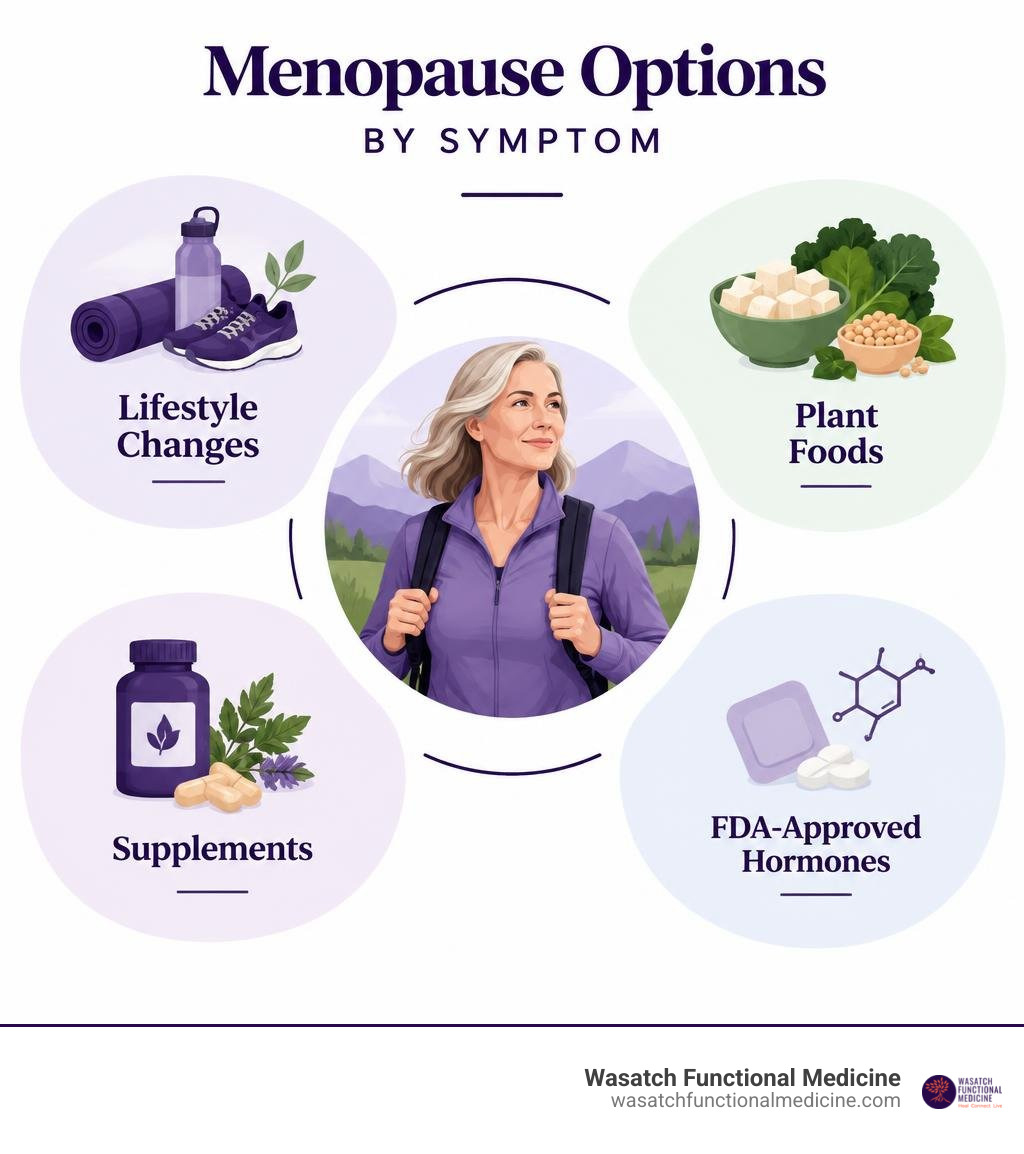
Natural HRT options include soy foods, lifestyle changes, and some herbal supplements. These may help with mild menopause symptoms, but they do not replace lost hormones or work as reliably as prescription hormone therapy. If you want hormones that match those your body makes, FDA-approved estradiol and progesterone are options to discuss with a clinician. They are still HRT, not hormone-free remedies.
Start with the symptom that bothers you most. Cooling strategies and menopause-focused cognitive behavioral therapy may help with hot flashes. Vaginal moisturizers can ease dryness. Herbs have mixed evidence and can interact with medicines, so review them with a clinician before trying one.
Understanding Natural HRT Options and How They Differ from Standard Therapy
Navigating perimenopause and menopause can feel like an unpredictable rollercoaster. When hot flashes, night sweats, brain fog, and sleep disruptions set in, finding effective relief is essential for restoring your quality of life.
Historically, standard Hormone Replacement Therapy (HRT) relied heavily on synthetic estrogens, conjugated equine estrogens (derived from pregnant mares’ urine), and synthetic progestins (such as medroxyprogesterone acetate). While these medications were standard for decades, clinical findings—including the landmark Women’s Health Initiative study—prompted women and healthcare providers to explore alternatives with better safety profiles and fewer side effects.
The fundamental distinction between standard synthetic therapies and bioidentical hormone therapy lies in molecular structure. Bioidentical hormones match the exact chemical and atomic blueprint of the hormones your ovaries naturally produce, such as 17-beta estradiol and micronized progesterone. In contrast, synthetic hormones have altered chemical structures that bind human hormone receptors differently, potentially causing undesirable downstream effects.
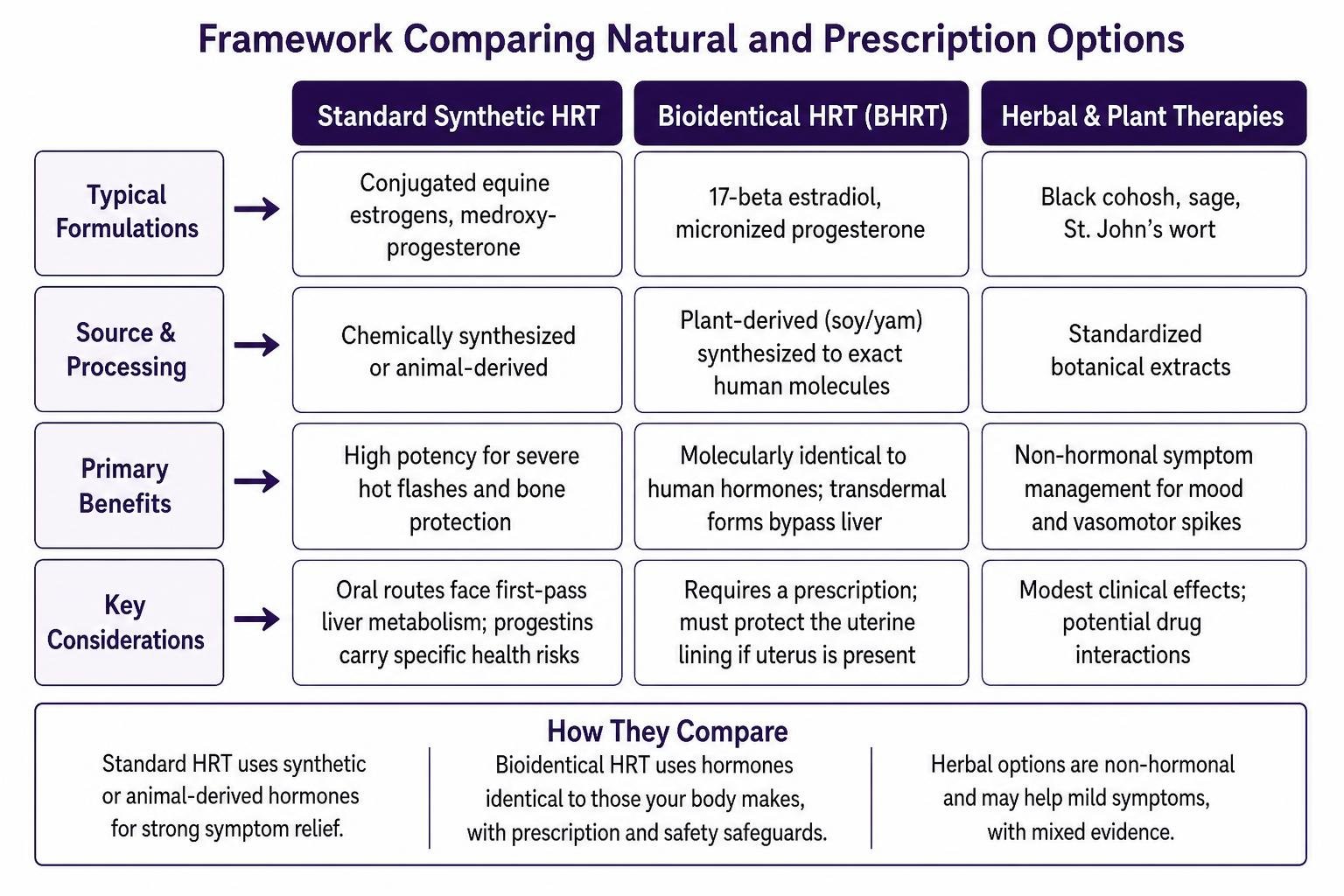
To help visualize how various options compare, here is a quick overview of the differences between conventional treatments, bioidentical hormones, and non-hormonal plant therapies:
| Category | Typical Formulations | Source & Processing | Primary Benefits | Key Considerations |
|---|---|---|---|---|
| Standard Synthetic HRT | Conjugated equine estrogens, medroxyprogesterone | Chemically synthesized or animal-derived | High potency for severe hot flashes and bone protection | Oral routes face first-pass liver metabolism; progestins carry specific health risks |
| Bioidentical HRT (BHRT) | 17-beta estradiol, micronized progesterone | Plant-derived (soy/yam) synthesized to exact human molecules | Molecularly identical to human hormones; transdermal forms bypass liver | Requires a prescription; must protect the uterine lining if uterus is present |
| Dietary Phytoestrogens | Whole soy, flaxseeds, legumes | Whole foods containing plant isoflavones and lignans | Gentle, mild estrogen receptor binding; cardiovascular support | Subtle effects; dependent on gut microbiome conversion |
| Herbal & Plant Therapies | Black cohosh, sage, St. John’s wort | Standardized botanical extracts | Non-hormonal symptom management for mood and vasomotor spikes | Modest clinical effects; potential drug interactions |
For a deeper dive into the chemical differences, review this comparative analysis of bioidentical vs synthetic HRT.
FDA-Approved vs. Compounded Bioidentical Hormones
A common misconception is that all bioidentical hormones are custom-mixed in specialty compounding pharmacies. In reality, bioidentical hormones fall into two distinct regulatory categories:
- FDA-Approved Bioidentical Hormones: These are standardized, commercially manufactured prescriptions available through standard pharmacies. Formulations such as 17-beta estradiol transdermal patches, gels, sprays, and oral micronized progesterone have undergone rigorous clinical testing for purity, bioavailability, and consistent batch dosing. Transdermal estradiol patches and gels bypass first-pass liver metabolism, lowering the risk of blood clots and stroke compared to oral synthetic estrogens. For a breakdown of available preparations, consult this FDA-approved bioidentical hormone guide.
- Compounded Bioidentical Hormones (cBHRT): These are customized preparations created by compounding pharmacists based on an individual prescription. While compounding is valuable for patients with severe allergies to standard pill binders or those requiring non-standard doses (such as micro-dosed female testosterone), these formulations lack pre-market FDA review and can exhibit batch-to-batch potency variations ranging from 26% under to 31% over label strength.
Dietary Phytoestrogens as Gentle Natural HRT Options
Phytoestrogens are naturally occurring plant compounds that share structural similarities with human 17-beta estradiol. Because of this molecular resemblance, they can weakly bind to estrogen receptors—particularly beta-estrogen receptors—acting as mild selective estrogen receptor modulators (SERMs).

The primary dietary classes include:
- Isoflavones: Found abundantly in organic soy foods (edamame, tempeh, tofu, and miso).
- Lignans: Concentrated in freshly ground flaxseeds, sesame seeds, and whole grains.
- Coumestans: Found in sprouted legumes, clover sprouts, and alfalfa.
Research shows that soy preparations can nearly halve the incidence of hot flashes for some women. A small study examining soy isoflavones at a daily dose of 54 mg observed a significant increase in bone mineral density in both the spine and femoral neck, showing bone-sparing potential similar to conventional therapy. Furthermore, a comprehensive 2025 review and meta-analysis confirmed that consuming whole, phytoestrogen-rich foods supports postmenopausal metabolic and cardiovascular health.
Your response to dietary soy depends heavily on your gut microbiome. About 50% of Asian women possess the intestinal bacteria necessary to convert the soy isoflavone daidzein into equol—a potent, highly active metabolite—compared to roughly 25% of Western women. Supporting gut health through fermented foods and fiber helps maximize the natural benefits of plant isoflavones.
Top Evidence-Based Herbal Remedies and Plant Therapies for Menopause Relief
For women seeking alternatives to pharmaceutical hormones, botanical therapies offer targeted, non-hormonal relief for specific climacteric symptoms. You can explore additional clinical contexts in this review of alternative therapies for menopause relief.
Black Cohosh and St. John’s Wort for Vasomotor and Mood Support
- Black Cohosh (Actaea racemosa): One of the most thoroughly researched botanicals for menopause. Rather than directly raising systemic estrogen levels, black cohosh acts through central nervous system pathways, modulating serotonin receptors and neurovascular thermoregulation. A 2022 research review confirmed its capacity to reduce the frequency and severity of hot flashes and night sweats.
- St. John’s Wort (Hypericum perforatum): Widely recognized for supporting mood balance and neurochemical equilibrium. In a 2019 randomized controlled trial on postmenopausal women, St. John’s wort significantly alleviated hot flashes, general menopausal discomfort, and depressive symptoms by supporting central serotonin and dopamine availability.
Sage, Red Clover, and Chasteberry for Hormonal Equilibrium
- Sage (Salvia officinalis): Traditionally used for excessive perspiration. A systematic review of four clinical studies concluded that standardized sage leaf extract meaningfully reduces both daily hot flash frequency and nocturnal sweating.
- Red Clover (Trifolium pratense): Packed with four distinct isoflavones (genistein, daidzein, formononetin, and biochanin A), red clover provides mild plant-based support for arterial elasticity and temperature regulation.
- Chasteberry (Vitex agnus-castus): A 2019 randomized double-blind clinical trial indicated that chasteberry significantly reduces anxiety and hot flash frequency during perimenopause by modulating dopamine and pituitary hormone signaling, supporting comprehensive anti-aging vitality.
Targeted Botanical Extracts: Milk Thistle, Valerian Root, and Maca
- Milk Thistle (Silybum marianum): Beyond supporting hepatic clearance, milk thistle demonstrates significant thermoregulatory benefits. In a 2020 randomized, double-blind, placebo-controlled trial involving 80 postmenopausal women, standardized milk thistle extract significantly reduced the frequency and severity of hot flashes over a 12-week intervention.
- Valerian Root (Valeriana officinalis): A 2018 triple-blind randomized clinical trial established that valerian root improves the severity of hot flashes and shortens sleep latency significantly better than placebo.
- Maca Root (Lepidium meyenii): An adaptogenic Peruvian root that supports the hypothalamic-pituitary-adrenal (HPA) axis, helping improve physical stamina, sexual desire, and stress resilience without directly altering serum estradiol levels.
Essential Vitamins, Nutrients, and Lifestyle Interventions
Hormonal transitions respond remarkably well to foundation-first functional medicine strategies that target cellular inflammation, adrenal stability, and nutrient repletion.

Targeted Vitamins and Micronutrients: B6, E, D, and Omega-3s
- Vitamin B6: A 2019 clinical investigation evaluating 262 women aged 40 to 65 demonstrated that targeted vitamin B6 supplementation significantly lowered hot flash severity by supporting neurochemical synthesis.
- Vitamin E: A 2020 triple-blind randomized controlled trial found that daily supplementation with 200 IU of vitamin E significantly reduced hot flash frequency and intensity in postmenopausal women.
- Vitamin D3 & K2: Crucial for bone mineral density, immune balance, and metabolic regulation.
- Omega-3 Fatty Acids (EPA/DHA): Help calm neuroinflammation, support heart health, and reduce the frequency of night sweats.
Mind-Body Practices and Non-Hormonal Prescription Alternatives
- Acupuncture: Clinical trials show that a five-week course of acupuncture significantly reduces hot flashes, nocturnal sweats, sleep disruptions, and mood swings.
- Tai Chi: A 2024 systematic review of 11 randomized controlled trials revealed that regular tai chi practice significantly improved bone mineral density, sleep quality, fatigue, anxiety, and depressive symptoms in peri- and postmenopausal women.
- Mindfulness & Cognitive Behavioral Therapy (CBT): A 2022 double-blind randomized trial found that menopause-specific CBT and mindfulness-based stress reduction dramatically improved both vasomotor distress and psychological symptoms.
- FDA-Approved Non-Hormonal Medications: For women who cannot take hormones (e.g., due to estrogen-sensitive cancers or cardiovascular history), neurokinin 3 (NK3) receptor antagonists such as fezolinetant (Veozah) and elinzanetant offer targeted relief for moderate-to-severe vasomotor symptoms. Compare these with traditional therapies using this comprehensive HRT medication comparison chart.
Risks, Limitations, and Safety Guidelines for Natural Alternatives
Natural supplements are active biological compounds, and “natural” does not automatically mean free of risk.
Key Safety Considerations
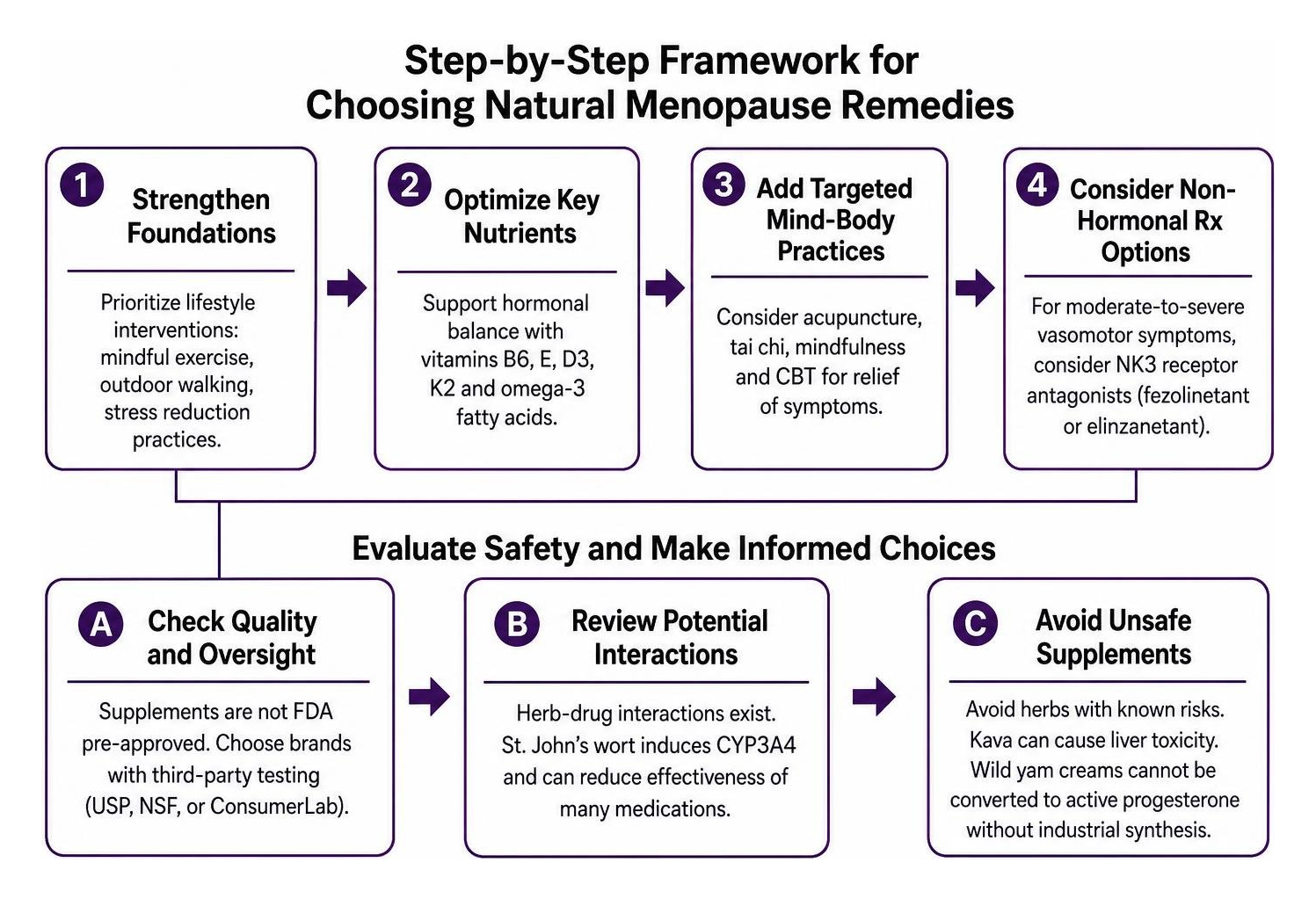
- Regulatory Oversight: Dietary supplements are not subjected to pre-market efficacy and purity validation by the FDA. Choose brands with independent, third-party testing certifications (USP, NSF, or ConsumerLab).
- Herb-Drug Interactions: St. John’s wort induces the hepatic cytochrome P450 3A4 (CYP3A4) enzyme system, accelerating the clearance of oral contraceptives, blood thinners, immunosuppressants, and antidepressants.
- Supplements to Avoid: Herbs such as kava carry documented risks of severe hepatotoxicity and are banned or restricted in several countries. Unregulated over-the-counter wild yam creams contain diosgenin, which cannot be converted into active progesterone by the human body without industrial chemical synthesis.
How to Choose the Right Natural HRT Options for Your Symptoms
- Map Your Primary Symptoms: Identify whether your primary challenge is vasomotor (hot flashes), mood instability, insomnia, or genitourinary dryness.
- Review Your Personal and Family Health History: Assess cardiovascular, clotting, and oncological risk factors with your healthcare provider.
- Protect the Uterine Lining: If you have an intact uterus and opt for prescription systemic estrogen therapy, you must combine it with micronized progesterone or an approved progestogen to prevent endometrial hyperplasia.
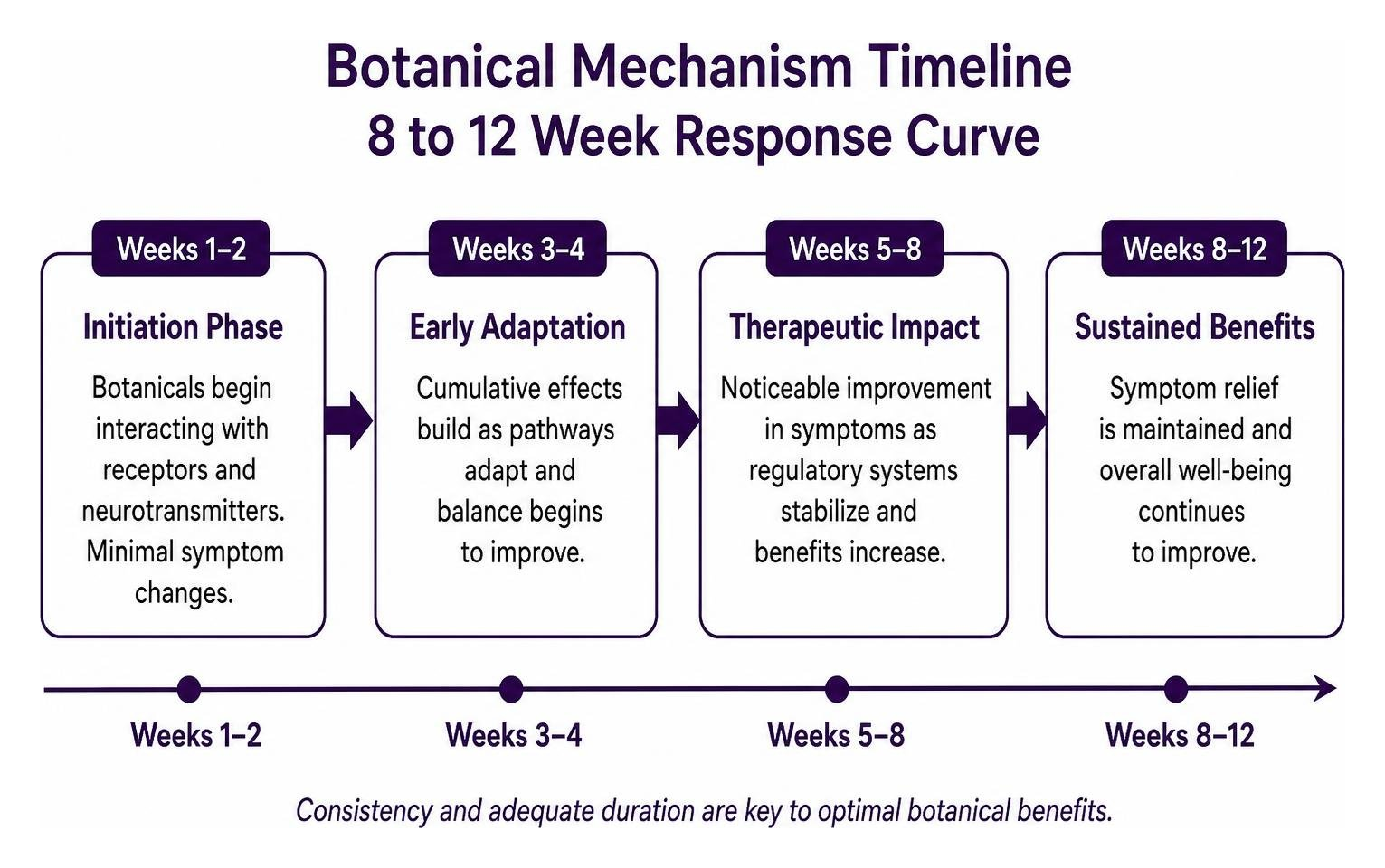
- Implement an 8-to-12-Week Trial Period: Botanical and nutritional interventions require consistent use over 8 to 12 weeks to achieve measurable physiological balance.
Frequently Asked Questions About Natural Menopause Therapies
Are bioidentical hormones safer or more effective than traditional HRT?
FDA-approved bioidentical hormones (such as transdermal 17-beta estradiol and oral micronized progesterone) provide clear safety advantages over older synthetic formulations. Transdermal estradiol bypasses first-pass liver metabolism, lowering the risk of venous thromboembolism and stroke compared to oral synthetic estrogens. Furthermore, large observational studies indicate that micronized progesterone carries a more favorable breast and cardiovascular profile than synthetic medroxyprogesterone acetate.
How long does it take for herbal menopause remedies to show results?
Unlike fast-acting pharmaceutical interventions, botanical therapies gently modulate neurochemical and cellular signaling over time. Most clinical trials observe significant symptomatic improvements after 8 to 12 weeks of consistent daily use.
Can natural supplements interact with conventional medications?
Yes. Certain botanicals can alter drug metabolism or compound therapeutic effects. For example, St. John’s wort interferes with numerous prescription drugs via liver enzyme induction, and high-dose vitamin E or ginkgo biloba can enhance the effects of anticoagulant medications. Always review your complete supplement list with a qualified clinician.
Conclusion
Navigating perimenopause and menopause does not require a one-size-fits-all approach. From gut-supported phytoestrogens and evidence-based botanicals to FDA-approved bioidentical hormones and targeted mind-body practices, you have access to a broad spectrum of supportive strategies.
At Wasatch Functional Medicine, we specialize in identifying and addressing the root causes of hormonal imbalance. Our clinical team designs personalized, genetics-and-lifestyle-driven treatment plans to restore your vitality and long-term wellness. Explore our comprehensive women’s wellness solutions to start your personalized path toward balance and vibrant health today.