

How Functional Medicine Approaches Chronic Pain
A chronic pain functional medicine approach starts by looking for factors that may be keeping pain going. That means reviewing your health history, sleep, stress, movement, nutrition, and conditions such as gut or autoimmune problems. From there, you and your clinician can build a plan around what matters most to your health and daily life.
Chronic pain lasts more than three months. It can affect work, sleep, and the activities you enjoy. There may not be one cause to fix, but a personalized plan can help you find useful next steps and track whether they improve your pain and function.

Chronic pain functional medicine terms explained:
Understanding Chronic Pain and the Limits of Conventional Care
Chronic pain is formally defined as pain that persists or recurs for longer than three months, outlasting the normal tissue-healing process. An estimated 21% of the US population experiences persistent discomfort (Trivedi et al., 2022). For many individuals, this pain transforms from a simple physical symptom into an overwhelming condition that alters daily cognitive, emotional, and social function.
Conventional pain management often relies heavily on pharmaceutical agents. While medications serve a vital role in acute injuries or post-surgical recovery, their long-term use for chronic conditions presents notable challenges.
| Dimension | Conventional Pain Management | Functional Medicine Pain Care |
|---|---|---|
| Primary Goal | Symptom suppression and acute relief | Identifying and resolving underlying root drivers |
| Diagnostic Focus | Isolated structural pathology or injury sites | Whole-body systems biology and biochemical individuality |
| Treatment Modalities | Pharmaceuticals, localized injections, surgical interventions | Anti-inflammatory nutrition, restorative movement, gut-brain support, stress reduction |
| Care Delivery | Protocol-driven and symptom-focused | Personalized, collaborative, and lifestyle-centered |
| Adverse Effect Risk | High risk of gastrointestinal, liver, and dependence issues | Low risk, focusing on natural biological healing mechanisms |
The Biopsychosocial Reality of Persistent Pain
Chronic pain operates through a biopsychosocial framework. It is rarely just an isolated signal from a damaged joint or muscle. Instead, pain is shaped by an intricate interplay among:
- Nociceptive signaling: Nerve transmissions communicating potential tissue distress.
- Central sensitization: A state where the central nervous system becomes hyper-reactive, amplifying normal sensory inputs into distressing pain signals.
- Emotional and cognitive factors: Chronic stress, anxiety, and depression that lower pain thresholds and elevate neural sensitivity.
- Social context: Cultural expectations, workplace strains, and interpersonal environments that influence how pain is experienced and managed.
Because the nervous system dynamically processes these combined inputs, attempting to solve persistent discomfort purely with isolated structural treatments often misses the broader physiological picture.
Why Medication-Only Approaches Fall Short
Relying entirely on pharmaceuticals for chronic discomfort introduces distinct limitations:
- Non-Steroidal Anti-Inflammatory Drugs (NSAIDs): Prolonged use can lead to gastric ulcers, intestinal permeability, cardiovascular strain, and renal stress.
- Opioids: Long-term administration carries high risks of physical dependence, tolerance buildup, respiratory depression, and opioid-induced hyperalgesia (where the medication paradoxically heightens pain sensitivity).
- Corticosteroids: Repeated steroid injections can weaken local connective tissues, elevate systemic blood glucose, and cause secondary immunosuppression.
- Rebound Pain and Symptom Masking: Pharmaceuticals often suppress warning signals without addressing cellular inflammation, leading to symptom recurrence once the dose wears off.
Clinicians and patients increasingly recognize that a personalized, multimodal strategy produces more sustainable outcomes than medication-only protocols (Trivedi et al., 2022).
The Chronic Pain Functional Medicine Framework for Root-Cause Healing
At its core, functional medicine views the body as an interconnected web rather than a collection of separate organs. Rather than asking “Which drug suppresses this pain?”, functional medicine asks, “Why is the body producing an inflammatory pain response, and what systemic imbalances are preventing natural healing?”
Practitioners use systems biology tools—such as the Functional Medicine Matrix developed by The Institute for Functional Medicine—to evaluate how genetic tendencies, environmental exposures, and lifestyle habits intersect. Understanding why functional medicine is right for you involves recognizing that your unique biochemistry requires a customized therapeutic approach rather than a one-size-fits-all prescription. Following patient-centered pain care guidelines from IFM, care teams map out clinical imbalances across assimilation, defense and repair, energy production, and communication pathways.
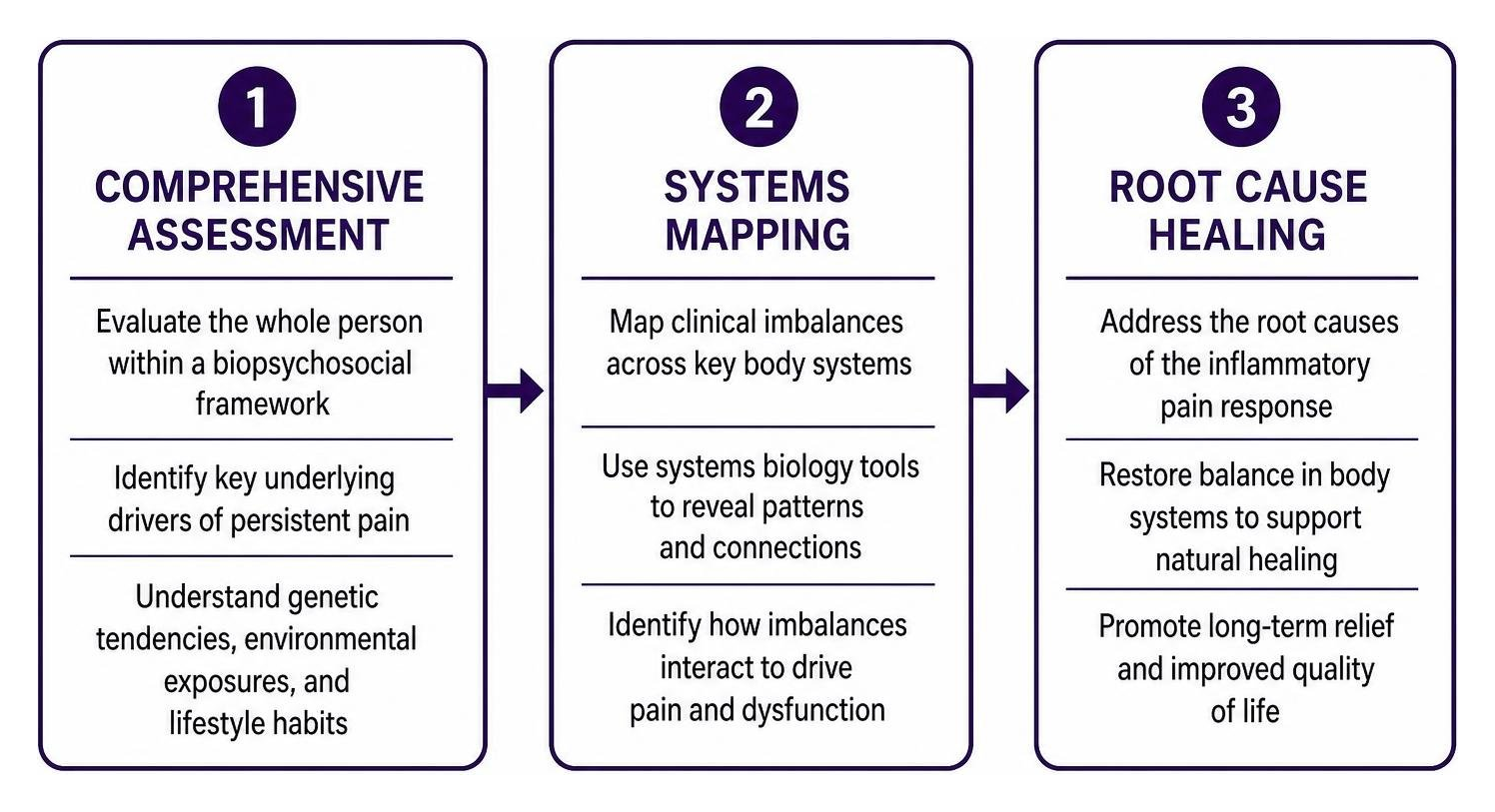
Key Underlying Drivers Evaluated in Chronic Pain Functional Medicine
When investigating persistent discomfort, clinicians systematically evaluate several core physiological drivers:
- Systemic Inflammation: Chronic low-grade immune activation continuously excites peripheral nerve endings, lowering the firing threshold for pain signals throughout the body.
- Immune Dysregulation: Exploring modern autoimmune treatment options is essential when the immune system mistakenly targets healthy tissues, as seen in conditions like rheumatoid arthritis, lupus, or Hashimoto’s thyroiditis.
- Hormone Imbalances: Fluctuations in cortisol, thyroid hormones, and sex hormones (such as estrogen and progesterone) influence pain tolerance, tissue regeneration, and restorative sleep quality.
- Mitochondrial Dysfunction: When cellular energy powerhouses fail to generate adequate ATP, muscles struggle to relax, causing trigger points, tissue fatigue, and widespread tenderness.
The Gut-Brain Axis and Neuro-Inflammation
The gastrointestinal tract plays a central role in systemic pain signaling. A disrupted gut microbiome combined with compromised intestinal barrier integrity (“leaky gut”) allows bacterial endotoxins, such as lipopolysaccharides (LPS), to enter the bloodstream.
Once in systemic circulation, these compounds cross the blood-brain barrier and trigger microglial cells—the resident immune cells of the central nervous system. Activated microglia release pro-inflammatory cytokines that irritate surrounding nerves, fueling central sensitization and widespread neuro-inflammation. Supporting gut health by repairing the mucosal lining and balancing the microbiome is therefore a foundational strategy for calming an overactive nervous system.
Lifestyle Interventions and Restorative Movement
Sustainable pain management relies on consistent, restorative daily habits. Integrative and functional therapies prioritize non-invasive modalities that support tissue recovery and improve physical capacity (Trivedi et al., 2022):
- Massage Therapy: Clinical research shows that targeted massage provides short-term pain relief lasting three to five months (Trivedi et al., 2022). In a trial of 228 participants, receiving 60-minute massage sessions two to three times per week led to significant reductions in chronic neck pain (Trivedi et al., 2022).
- Spinal Manipulation Therapy: Hands-on structural adjustments demonstrate remarkable outcomes for mechanical pain. Research indicates a 75% improvement in chronic lower back pain with spinal manipulation compared to a 25% improvement with conventional physiotherapy (Trivedi et al., 2022). Delivering 12 sessions over six weeks yielded peak functional and pain improvements that remained sustainable at 52 weeks (Trivedi et al., 2022).
- Acupuncture: Traditional needle insertion and modern thread-embedding acupuncture stimulate local blood circulation, release endorphins, and modulate pain pathways, delivering effective relief lasting three to five months (Trivedi et al., 2022).
Anti-Inflammatory Nutrition and Metabolic Health
Dietary choices directly regulate systemic inflammation. Consuming nutrient-dense, whole-food dietary patterns—such as the Mediterranean diet or structured plant-based nutrition—reduces circulating inflammatory markers like C-reactive protein (CRP) and tumor necrosis factor-alpha (TNF-α).
In patients with fibromyalgia, adopting primarily plant-based dietary patterns yields significant improvements in sleep quality, pain at rest, and general vitality. Targeted elimination protocols also help uncover hidden food sensitivities that trigger systemic immune flare-ups and joint stiffness.
Yoga and Mind-Body Stress Reduction
Mind-body movement serves as a gentle bridge between sedentary stiffness and active living:
- Yoga: A randomized controlled trial demonstrated that a structured 12-week yoga protocol is non-inferior to standard physical therapy for non-specific chronic lower back pain, with functional improvements maintained for up to one year (Trivedi et al., 2022).
- Mindfulness-Based Interventions: Mindfulness-based stress reduction (MBSR) practices—which blend meditation, gentle yoga, and cognitive coping techniques—are highly effective for reducing pain intensity and easing co-occurring depressive symptoms.
- Nervous System Regulation: Mindful breathing activates the parasympathetic nervous system via the vagus nerve, reducing autonomic arousal and lowering pain catastrophizing.
Developing a Collaborative Chronic Pain Functional Medicine Roadmap
Lasting recovery requires an empowering, collaborative relationship between the patient and care team. Partnering with a clinic that provides comprehensive functional medicine in South Ogden ensures that your treatment plan is tailored to your unique biology, daily schedule, and personal recovery goals.
By combining advanced biomarker testing, anti-inflammatory nutrition, restorative movement, and hands-on therapies, a personalized roadmap addresses the root causes of pain while building long-term physical resilience.
Frequently Asked Questions About Chronic Pain and Functional Care
How does functional medicine identify the root cause of chronic pain?
Clinicians begin with an in-depth health history that covers your genetic background, lifestyle habits, toxic exposures, and emotional stressors. They utilize specialized functional testing—such as comprehensive stool panels, hormone mapping, food sensitivity testing, and advanced inflammatory biomarkers—to uncover underlying metabolic, immune, and gut imbalances that conventional tests might overlook.
How long does it take to see results from an integrative pain approach?
Healing timelines vary based on chronicity and systemic complexity. Modalities like targeted massage therapy, spinal manipulation, and acupuncture frequently deliver noticeable relief within four to eight weeks (Trivedi et al., 2022). Resolving deep-seated metabolic, autoimmune, or gut-driven inflammation typically requires three to six months of consistent nutritional and lifestyle optimization.
Can functional medicine help reduce reliance on prescription pain medications?
Yes. As systemic inflammation decreases, tissue repair improves, and central nervous system sensitivity calms down, baseline pain levels naturally drop. Functional medicine practitioners work collaboratively with prescribing physicians to design safe, gradual tapering protocols as non-pharmacological therapies restore daily comfort and function.
Conclusion
Chronic pain does not have to be an inevitable life sentence managed solely with temporary symptom suppression. By adopting a systems-based, biopsychosocial approach, you can systematically uncover and resolve the underlying drivers of discomfort—from gut dysbiosis and hormonal imbalances to neuro-inflammation and biomechanical stress.
Empowering your body with restorative movement, anti-inflammatory nutrition, and targeted integrative therapies allows you to transition from merely coping with pain to experiencing true whole-body vitality. If you are ready to identify your root causes and build a personalized path toward sustainable relief, connect with the dedicated team at Wasatch Functional Medicine today.
References
Trivedi H, Avrit TA, Chan L, Burchette M, Rathore R. “The Benefits of Integrative Medicine in the Management of Chronic Pain: A Review..” Cureus, 2022. PMCID PMC9635890.